
You don’t have to see smoke for it to affect your home.
Days after a fire, the air may seem clear, the walls may look clean, and the only reminder might be a faint smoky smell. It’s easy to assume the worst is over.
Unfortunately, that’s not always the case. Smoke is made up of microscopic particles that can settle deep into carpets, furniture, walls, insulation, and even your HVAC system. Every time those particles are disturbed, they can become airborne again, affecting the air you breathe. While not everyone experiences the same reaction, prolonged exposure to smoke residue can contribute to a variety of health symptoms—especially if the damage hasn’t been properly cleaned.
Understanding how smoke affects your home and your health can help you decide what needs immediate attention and why a lingering smoky smell should never be ignored.
What Makes Smoke Damage Harmful?
Smoke is more than just a bad odor. It’s a mixture of tiny particles, soot, gases, and chemicals produced when materials burn.
The exact composition depends on what caught fire. Wood, plastics, insulation, fabrics, electronics, and household products all release different substances when they burn, leaving behind residue that can settle throughout the home.
Unlike dust, smoke particles are incredibly small. They can travel through air vents, settle inside wall cavities, cling to fabrics, and reach rooms that never came into direct contact with the fire.
Common Symptoms of Smoke Exposure
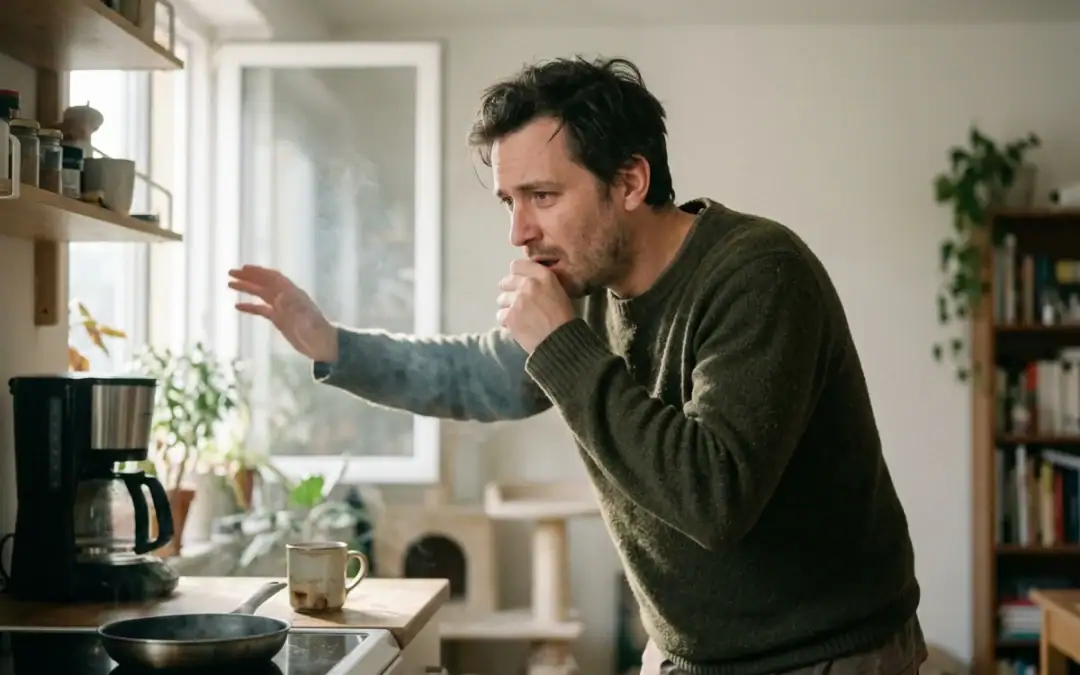
Smoke affects everyone differently, but poor indoor air quality after a fire can lead to symptoms that range from mild irritation to more noticeable respiratory problems.
Common symptoms include:
- Persistent coughing
- Sore throat
- Burning or watery eyes
- Runny nose
- Headaches
- Dizziness
- Wheezing
- Shortness of breath
- Skin irritation
Some people notice these symptoms only while they’re inside the home, with relief coming after they’ve been away from the affected environment.
Who Is Most Vulnerable?
Although anyone can be affected by smoke residue, certain groups are generally more sensitive.
These include:
- Infants and young children
- Older adults
- People with asthma
- Individuals with allergies
- Anyone with chronic lung or respiratory conditions
- People with weakened immune systems
Because these individuals may react more quickly to poor indoor air quality, it’s important not to dismiss persistent symptoms after a fire.
Why the Smell Doesn’t Go Away
One of the most common questions homeowners ask is, “Why does my house still smell like smoke even after I’ve cleaned it?”
The answer is simple: the odor is usually a sign that smoke particles are still present.
Opening windows, spraying air fresheners, or lighting candles may temporarily mask the smell, but they don’t remove the source. Smoke residue can remain trapped inside porous materials such as:
- Carpet
- Upholstered furniture
- Curtains
- Mattresses
- Drywall
- Insulation
- Wood framing
Until those particles are properly removed, the odor often returns.
Is It Safe to Clean Smoke Damage Yourself?
For a small cooking mishap that produces light smoke, homeowners may be able to clean hard, non-porous surfaces themselves.
However, after a house fire, smoke contamination is rarely limited to what you can see.
Using the wrong cleaning products can smear soot, permanently stain surfaces, or spread residue even further. Smoke particles also penetrate areas that standard household cleaning methods simply can’t reach.
Professional smoke damage cleaning uses specialized equipment and cleaning techniques to remove residue from both visible and hidden areas while helping improve indoor air quality.
Smoke Isn’t the Only Problem After a Fire
While smoke often receives the most attention, it’s only one part of the damage.
The water used to extinguish a fire can soak into drywall, flooring, insulation, and structural framing. If that moisture isn’t removed promptly, it can create additional issues, including warped materials and mold growth.
That’s why many fire recovery projects also include water damage restoration. Addressing both smoke and moisture at the same time helps prevent secondary damage and supports a more complete recovery.
How Long Can Smoke Residue Stay in a Home?
Smoke residue doesn’t simply disappear with time.
Without proper cleaning, it can remain inside a home for weeks, months, or even longer. During that time, particles may continue circulating through the HVAC system or become airborne whenever furniture is moved, carpets are vacuumed, or everyday activity disturbs contaminated surfaces.
The sooner smoke residue is addressed, the easier it is to prevent long-term staining, corrosion, odors, and indoor air quality concerns.
When Should You Call a Professional?
It’s a good idea to have your home professionally evaluated if:
- Smoke odors remain after basic cleaning.
- Soot is visible on walls, ceilings, or belongings.
- The HVAC system was running during the fire.
- Several rooms were exposed to smoke.
- Family members experience coughing, headaches, or eye irritation while indoors.
Even fires that appear relatively minor can leave behind contamination that’s difficult to detect without specialized equipment and experience.
Final Thoughts
Smoke damage is about far more than what you can see—or smell. Long after a fire is extinguished, microscopic particles can remain inside your home, affecting indoor air quality, damaging surfaces, and creating an environment that’s less healthy for your family.
Restoring a home after a fire means addressing both the visible damage and the hidden contaminants left behind. Professional fire damage restoration and smoke damage cleaning help remove harmful residue, improve indoor air quality, and restore your home to a safe, comfortable place to live. Don’t let lingering smoke become a lasting problem—if your home has been affected by a fire, call us today to schedule a professional smoke damage assessment and start moving forward with confidence.